Creating Visions of Future War: Storytelling as a Tool for Strategic Foresight

Students from Leiden University’s ISGA and Institute for History explored the future of war through speculative storytelling. Blending research, theory, and creative writing, the project showed how imagination can sharpen strategic foresight and challenge conventional thinking about conflict.
Between April and December 2025, students from the Institute of Security and Global Affairs and the Institute for History at Leiden University embarked on an experimental project: Creating Visions of Future War. Supported by a KIEM grant, the initiative asked a provocative question: Can creative writing, carefully guided, serve as a serious tool for thinking about the future of conflict? At first glance, imagination and analytical rigour might seem like strange bedfellows, especially in fields like Security and Strategic Studies, which often rely on structured analysis and favour rationality over imagination. Yet this project demonstrated that speculative storytelling and unstructured thought can reveal insights conventional methods often miss, allowing students to inhabit the perspectives of those making and living through future conflicts.
The Project
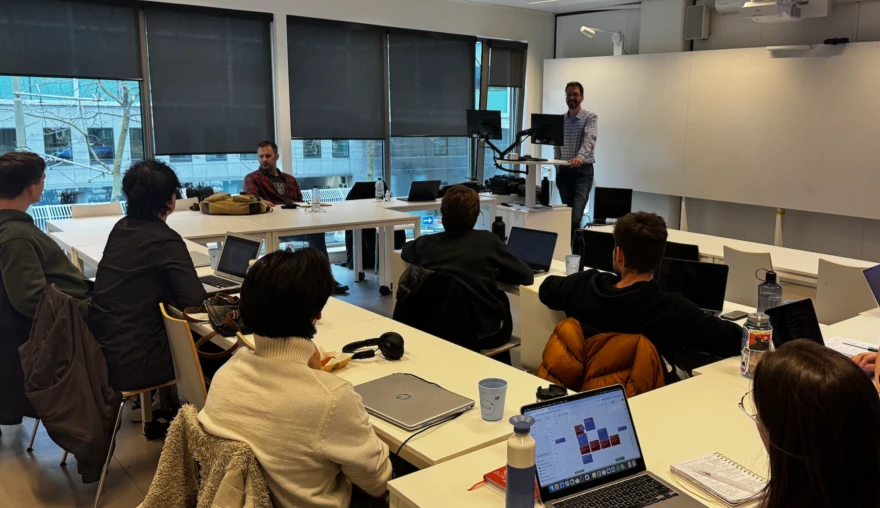
The project began with the recruitment of nine students, six from ISGA and three from the History Institute, intentionally creating an interdisciplinary mix to encourage diverse thinking. At the heart of the project was a series of half-day workshops led by Malte Riemann (ISGA), Lukas Milevski (Humanities), and Benjamin Budde (professional fiction writer).
These sessions focused on forecasting models, the history of thinking about the future of war (including its persistent track record of flawed prediction), narrative structure and world-building, developing plausible scenarios of future warfare, and balancing creativity with strategic relevance. Students then embarked on the writing phase, producing speculative narratives grounded in contemporary security debates, technological trends, and historical precedents. The aim was never simply to tell imaginative stories; rather, students were encouraged to integrate research, theory, and creativity in ways that challenged assumptions and engaged with uncertainty as an ongoing condition rather than a problem to be solved.
The project culminated in a final workshop and presentation session where students shared their narratives with a panel of experts, which included Sergei Boeke (POLAD Joint Support and Enabling Command, NATO), Jana Fey (International Space University) and Emil Archambault (German Council on Foreign Relations). This interaction connected the classroom to the policy world, testing the narratives against professional experience and strategic realities. The expert panel selected one narrative as the winning piece, which will be published in the Militaire Spectator in June, accompanied by an introduction from Malte Riemann explaining the rationale behind the project. The remaining two finalist narratives, while not selected as the official winner, demonstrate exceptional creativity and offer readers a broader view of the imaginative approaches students took to envision future conflict, and are therefore available to read here.
What we Learned
The project’s outcomes were multifaceted. The speculative narratives explored a range of plausible futures, demonstrating strong engagement with historical context, strategic considerations, and innovative storytelling. Students successfully combined historical insight with contemporary security concerns, creating narratives that reflected a thoughtful balance between imagination and strategic plausibility, thereby demonstrating how creative writing can serve as a serious analytical tool. By drawing on diverse disciplinary backgrounds, students were able to approach future conflict from multiple angles (political, technological, social, and ethical), and by avoiding linear or deterministic thinking, developed more nuanced and layered visions of future conflict. Beyond the narratives themselves, participants developed transferable skills including creative thinking, analytical reasoning, research, communication, and project management. Interaction with external professionals helped students understand real-world expectations while giving practitioners a glimpse of security issues from unconventional perspectives.
Looking Ahead
The success of Creating Visions of Future War has already paved the way for further initiatives. Malte Riemann, project lead, was recently awarded a Comenius Teaching Fellowship to expand the project’s ideas and refine creative writing as a pedagogical tool in security and war studies. Future iterations aim to integrate this approach into teaching programs, continue interdisciplinary collaboration, and extend engagement with professional practitioners.
For those interested in exploring the outcomes of Creating Visions of Future War, the two runner-up narratives, “The Ostrich” by L.K. and “Empty Boots” by Lucas Moon-Almaraz, are available to read here. They represent the same level of commitment, rigor, and creativity that characterized the project as a whole. Together, they showcase the variety of perspectives and potential futures resulting from this experiment, highlighting the students’ impressive imagination and writing abilities.